REVIEW · ADELAIDE
Cultural Caper Adelaide Walking Tour
Book on Viator →Operated by Down to Earth Tours · Bookable on Viator
A North Terrace stroll can still feel personal. This is an easy-paced orientation tour that strings together big decision-making buildings and moving memorials in one short loop, and I really like the free entry to the key stops and the fact that Graeme’s storytelling makes the details click. The only real consideration is that the pacing is relaxed, so if you want nonstop building-by-building deep dives, you may want to ask for extra time on the architecture.
For first-time visitors, this works fast. In around two hours, you cover a mile-long cultural stretch without feeling like you’re crossing town, and you end right at the Art Gallery so you can roll into more sightseeing immediately after.
In This Review
- Key Highlights Worth Your Time
- What You’re Really Paying for: $36.93 and Two Hours of Focus
- Entering the North Terrace Cultural Corridor: Start at Parliament, Finish at the Art Gallery
- Stop 1: Migration Museum and the Stories Behind a Former Destitute Asylum
- Stop 2: Parliament House of South Australia and Women’s Voting Rights
- Stop 3: State Library of South Australia, Plus Inside Access
- Stop 4: National War Memorial and the Honour List
- Stop 5: University of Adelaide Grounds and Old-Australia Architecture
- Stop 6: Old Government House and Garden from the Gate
- Stop 7: Art Gallery of South Australia and Why Patronage Matters
- Pacing, Walking Reality, and Weather: Easy Means Manageable
- How Graeme’s Style Can Make or Break Your Experience
- Who This Tour Fits Best
- Should You Book This Cultural Caper Adelaide Walking Tour?
- FAQ
- How long is the Cultural Caper Adelaide Walking Tour?
- What are the main stops on the route?
- Is admission included for the sites on the itinerary?
- Where does the tour start and end?
- Does the tour include food or drinks?
- Is the tour suitable for different weather?
- Is there a fitness requirement?
- What is the group size limit?
Key Highlights Worth Your Time
- Graeme’s on-the-ground storytelling: clear facts plus jokes and anecdotes that keep it from feeling like a textbook walk
- A tight North Terrace loop: you see a lot in a small area, with moderate walking and an easy pace
- Multiple major stops with free admission: places like the State Library and the War Memorial are built into the route
- High-impact memorials and civic buildings: women’s suffrage, Great War remembrance, and government history all in one morning
- Architecture and design at every turn: from government offices to university grounds to art spaces
- A photo packet that adds context: a practical way to connect what you see with what came before
What You’re Really Paying for: $36.93 and Two Hours of Focus
This tour is priced at $36.93 per person, and the value is mostly in how it bundles context. Instead of just seeing buildings from the outside, you get a local guide and a plan that leads you into several major civic and cultural sites. The route also stays compact, so the “transport” cost is mostly just your shoes and time.
It’s also priced like a realistic activity for a day of sightseeing. Two hours is long enough to learn a lot, but short enough to fit alongside a museum visit, lunch, or a second neighborhood walk later.
One thing to keep in mind: the tour is “moderate walking,” and the duration is approximate. In practice, that means you should be ready for a steady, comfortable pace rather than a quick sprint between photos.
Other Adelaide walking tours reviewed in Adelaide


Entering the North Terrace Cultural Corridor: Start at Parliament, Finish at the Art Gallery
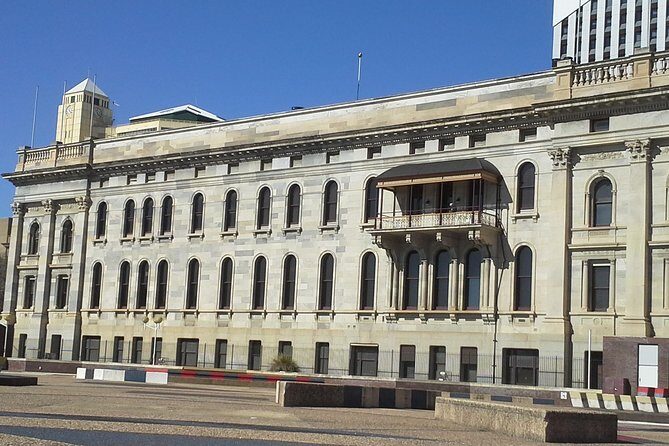
The walk is designed as a straight, sensible line of sights along North Terrace. You start outside Parliament House at North Terrace, then work your way through a mix of institutions and monuments, finishing at the Art Gallery of South Australia on North Terrace.
This matters because it reduces decision fatigue. You don’t have to guess which stop to pick next, and you don’t have to backtrack. It also means you can plan your day around a clean starting point and a very convenient finish.
The tour is capped at a small group size—maximum 15 people per booking, with a maximum of 20 travelers overall. Smaller groups make it easier to hear the guide and to ask questions without waiting your turn.
It also uses a mobile ticket, so you don’t need to hunt for paper.
Stop 1: Migration Museum and the Stories Behind a Former Destitute Asylum
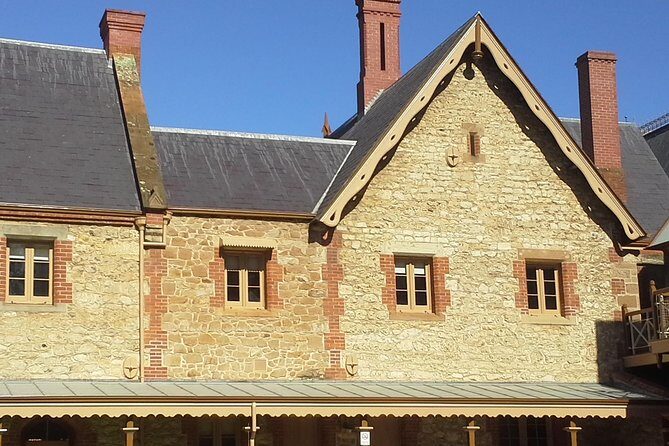
The tour begins at the Migration Museum, where you’ll visit a historic site that used to be a Destitute Asylum. Even on a first pass, this stop tends to stick with people because it’s not just about a building—it’s about what that building represented in daily life.
You’ll get discussion around the stories connected to its use, and that gives the rest of the tour a stronger emotional backbone. The Adelaide you see after this stop isn’t only elegant facades and ceremonial structures. It also includes the human side of social policy—who was helped, who was displaced, and how institutions shaped lives.
This stop is also short, about 15 minutes, so you’re not stuck in a lecture. The goal is to spark understanding, then move on while the meaning is still fresh in your mind.
Practical tip: wear shoes that handle walking comfortably, and expect to stand and look as the guide points out details and themes.
Stop 2: Parliament House of South Australia and Women’s Voting Rights

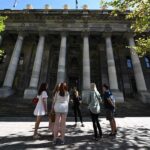
Next up is Parliament House of South Australia, where you’ll marvel at the historic building and hear how it connects to women gaining the vote in South Australia.
This is one of those civic stops that can feel abstract if you’re just passing by. With a guide, it becomes tangible. You learn not only that political change happened, but that the building itself is part of the story—government as a physical place, not just a concept.
The time here is around 10 minutes, so it’s meant as a focused orientation moment. If you like politics, you’ll probably want to ask follow-up questions. If you don’t, it still works because it ties into a clear turning point rather than vague history.
Stop 3: State Library of South Australia, Plus Inside Access
The State Library of South Australia is where the tour shifts from government to culture, and it’s one of the easiest “wow” stops. You’ll talk about the library’s role and then enter the building to explore one of the world’s notable libraries dating from 1884.
What I like about this stop is that it feels calm but important. Libraries are easy to overlook when you’re scanning for big landmarks, yet they’re a major part of how Adelaide built its public identity—education, reading rooms, and preservation of local memory.
This stop runs about 15 minutes, and it’s usually long enough to get the main points without feeling rushed. You’ll also get a sense of why the library matters beyond stacks of books.
If you’re the type who enjoys architecture, this is also a great place to slow down. Look up. Notice materials and layout. Ask the guide what to look for.
Other walking tours we've reviewed in Adelaide



Stop 4: National War Memorial and the Honour List
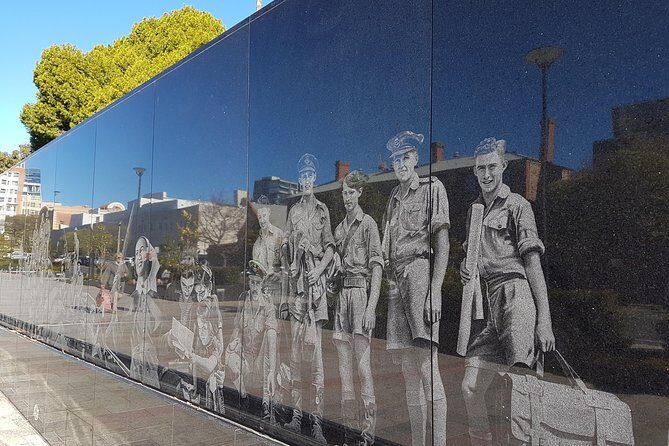
At the National War Memorial, Adelaide, you’ll spend around 10 minutes marveling at the monument and hearing how its symbolic reliefs work. Then you’ll enter the memorial area to view the honour list of South Australian soldiers who died during the Great War.
This is the emotional center of the route. The guided explanations help you read the memorial instead of just absorbing a silhouette. You learn how meaning is built into the reliefs and why the honour list is so significant.
One review highlight also mentioned being taken by the statue of The Honourable Dame Roma Mitchell, which fits the theme of remembrance and public service that the memorials and monuments on this route encourage you to reflect on.
If you prefer quiet moments, you’ll likely appreciate this stop. It isn’t a nonstop photo stop; it’s a look, a pause, and a chance to understand what you’re seeing.
Stop 5: University of Adelaide Grounds and Old-Australia Architecture

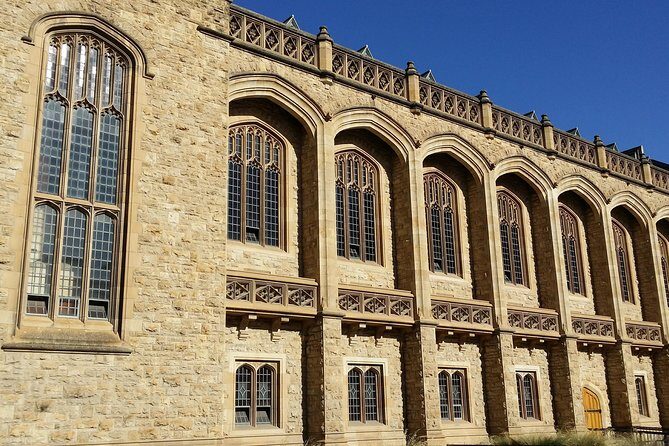
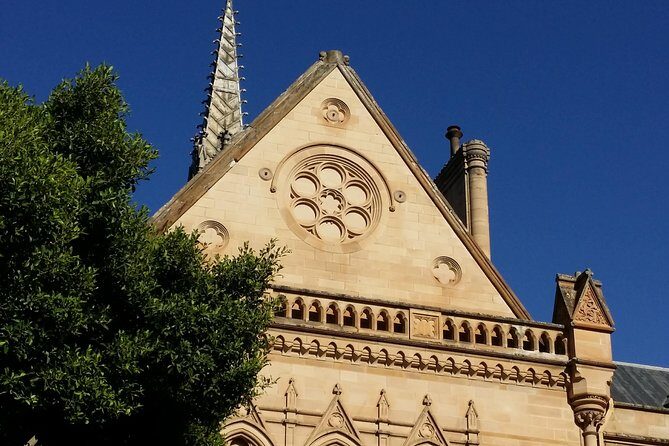
Next is The University of Adelaide. You’ll admire striking architecture and wander through the grounds for about 5 minutes.
This short segment matters because it shows Adelaide’s identity isn’t only built on government and war remembrance. It’s also built on education and long-term institutions. The university is described as being among the oldest in Australia, and the tour uses that fact to connect the present to the early years of the city.
Don’t expect a long campus tour. This is more of a visual and thematic stop, designed to help you recognize Adelaide’s older institutions in the city fabric.
If you have extra time later, you might want to come back on your own and walk the campus more slowly—this tour gives you the why, and it points you toward what to notice.
Stop 6: Old Government House and Garden from the Gate
After the university, you’ll see Old Government House and Garden from the outside gate. It’s about 5 minutes, and the guide explains the role of governors and what makes this site notable—it’s described as the oldest continuously used Government House in Australia.
Even from the outside, this stop works because you get the institutional context. Government House isn’t only a location; it’s a symbol of how authority and representation were built and carried forward.
The “outside gate” approach also keeps the walking flow intact. You still get a sense of place and history without breaking the tour rhythm.
Stop 7: Art Gallery of South Australia and Why Patronage Matters
The final stop is the Art Gallery of South Australia, where the guide discusses the importance of the arts in South Australia and highlights the role of benefactors or philanthropists who donated money to start the institution.
This ending makes sense. After civic buildings, libraries, and memorials, you land in a space designed for public culture. The guide helps connect the dots between money, patronage, and what a community decides to preserve and display.
You’ll finish outside the gallery, which is convenient if you want to keep going. This is a good place to transition from guided learning to self-directed wandering, especially if you’re into collections, exhibitions, or even just the building and surroundings.
Pacing, Walking Reality, and Weather: Easy Means Manageable
The tour is easy-paced and suitable for all age groups, but it still includes moderate walking. The route is short enough that it’s often an add-on to a day of sightseeing, not a full-day commitment.
A few practical reminders:
- Bring comfortable shoes. You’ll be on your feet often, and “mild” walking still adds up over time.
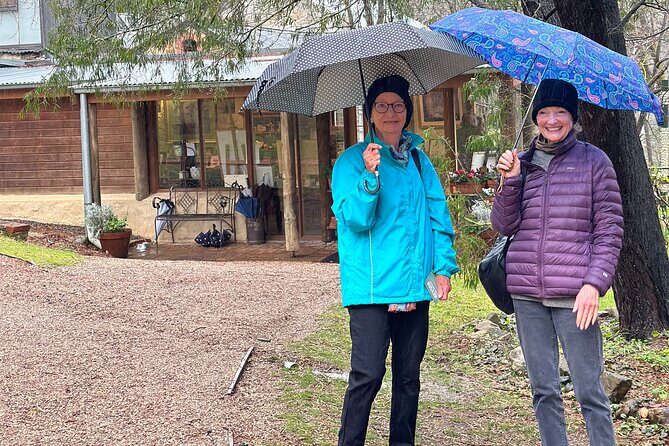
- It operates in all weather conditions, and you should dress appropriately. Adelaide weather can change, so plan for cool wind or wet patches.
- The group size is small, which usually makes the tour feel more personal and less rushed.
If you tend to get cold, plan layers. If you sweat easily, plan breathable clothing. The tour doesn’t mention breaks for food, so you’ll want to be ready to move between stops.
How Graeme’s Style Can Make or Break Your Experience
In the feedback, Graeme shows up again and again for a reason: he doesn’t just list dates. He blends factual explanations with humor and storytelling, and he’s comfortable encouraging questions and conversation.
Several reviews also mention his photo packet. That matters more than you might think. Historic photos help you compare what used to be there with what you see now, especially on a route where you’re seeing institutions with long timelines.
That said, one caution did appear in feedback: if you want maximum time on buildings and architecture rather than statues and public art moments, the relaxed pace might not match your expectations. The good move here is to go in curious. If you have a preference, you can ask the guide to focus more on what you care about.
Who This Tour Fits Best
This walk is a strong fit if you:
- are in Adelaide for the first time and want a clean orientation fast
- like civic history, memorials, and culture in the same route
- prefer small-group guiding rather than a large bus tour
- want to add several major indoor stops without planning them one by one
It’s also a good option if you’re short on time. Two hours plus a route that ends at the Art Gallery gives you a natural handoff to the rest of your day.
If you dislike walking, or if you require long sedentary time, this might feel too active. But for most people with moderate mobility, it’s designed to be manageable.
Should You Book This Cultural Caper Adelaide Walking Tour?
If you want an Adelaide intro that feels thoughtful instead of checklist-y, I’d say yes. The value is in getting guided context at major institutions with free admission stops and a finish at the Art Gallery that keeps your day flowing.
Book it if you enjoy stories, architecture cues, and the kind of history that connects political decisions, social change, remembrance, and arts patronage. It’s the kind of tour that gives you a map of meaning, not just a map of streets.
Skip it only if you’re looking for a long, deep, stop-by-stop architectural seminar. This one is short, easy-paced, and designed to cover a lot without turning into a slog.
FAQ
How long is the Cultural Caper Adelaide Walking Tour?
The tour runs for about 2 hours.
What are the main stops on the route?
The route includes the Migration Museum, Parliament House of South Australia, the State Library of South Australia, the National War Memorial, the University of Adelaide, Old Government House and Garden, and the Art Gallery of South Australia.
Is admission included for the sites on the itinerary?
The stops listed include free admission tickets for the featured locations.
Where does the tour start and end?
It starts at Parliament House, North Terrace, Adelaide and ends outside the Art Gallery of South Australia at 490 North Terrace.
Does the tour include food or drinks?
No. Food and drinks are not included.
Is the tour suitable for different weather?
Yes. It operates in all weather conditions, and you should dress appropriately.
Is there a fitness requirement?
The tour is described as requiring a moderate physical fitness level.
What is the group size limit?
There is a maximum of 15 people per booking, and a maximum of 20 travelers for the activity.