REVIEW · ADELAIDE
Adelaide: 4-Hour Swimming with Dolphins Experience
Book on GetYourGuide →Operated by Temptation Sailing · Bookable on GetYourGuide
Dolphins decide when the magic starts. This 3.5-hour Adelaide dolphin swim runs offshore from Glenelg on the Temptation sailing catamaran, then sends you snorkelling where wild dolphins choose to play—no feeding, no script. I love that the experience is built around real animal behaviour, not staged encounters, and it pairs that with strong on-water guidance.
The biggest wins for me are the up-close moments and the education. You can hear dolphin whistles and get fascinating explanations from the crew (marine biologists are on board, and guides like Brett and Holly were called out for dolphin facts and local marine life), which makes the whole outing feel smarter, not just louder and splashier. I also like that you’re in the water multiple times, with opportunities to see pods from both the boat and your snorkel spot.
One thing to plan for: the outing is weather and swell dependent. If conditions are rough, you might feel it in your body (some folks report seasickness), and the water can be cold even with a wetsuit, so bring your basics and dress like you’re going outside, because you are.
In This Review
- Key things I’d circle before you go
- Arriving in Glenelg: Finding the Marina Pier fast
- Boarding the 58-foot Temptation and cruising the southern coast
- Wetsuit, mask, snorkel: what you’re really signing up for
- The dolphin swim setup: net under the boat vs being towed behind
- Watching dolphins close up: the whistles, the bubbles, the science talk
- Boat viewing counts too: what to do if you miss the closest moments
- Photo and video: turning one good moment into a whole memory
- Seasickness, cold water, and real-life body limits
- Value check: is $105 fair for a 3.5-hour dolphin swim?
- After the swim: what to do back at Glenelg
- Should you book the Adelaide dolphin swim with Temptation?
- FAQ
- Where is the meeting point?
- How long is the tour?
- How much does it cost?
- What’s included in the experience?
- What should I bring?
- Are refreshments provided?
- Is the tour suitable for people with mobility impairments or heart problems?
- Is there a live guide and what language?
- Can I cancel for a refund?
Key things I’d circle before you go
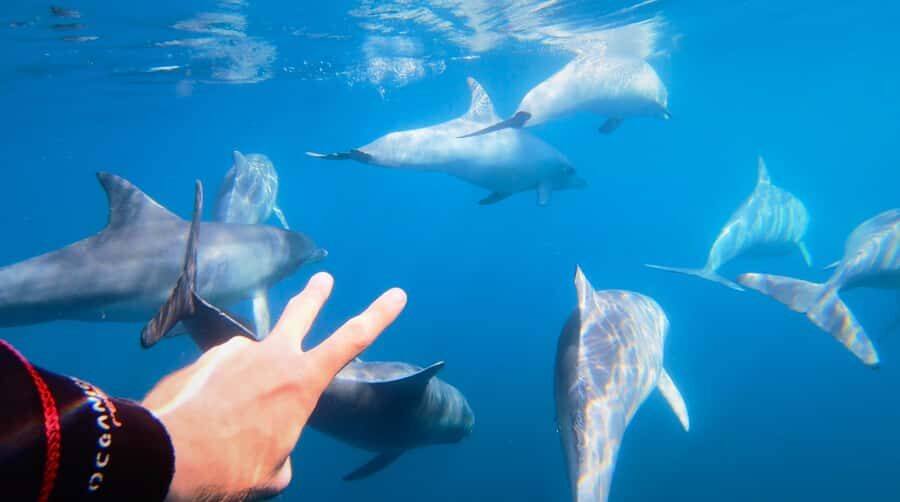
- Wild dolphin etiquette first: the crew looks for pods and then respects their space, moving on when it’s time.
- Multiple in-water chances: you’ll get more than one shot to see dolphins from close range.
- Two swim styles: you may snorkel under a net at the front of the boat or be towed behind, depending on how the pod moves.
- Front tends to win for viewing: the net/front swim gets the most action, while the back swim can be quieter for dolphin sightlines.
- Marine biologist-style commentary: expect dolphin behaviour talk, plus lots of time for questions.
Arriving in Glenelg: Finding the Marina Pier fast
Your day starts in Glenelg, about 20 minutes from Adelaide CBD, at Marina Pier. Meet at the bottom of the stairs/ramp in front of The Oyster Bar, right at the end of Anzac Highway—easy once you’re there, less easy if you show up without a quick map check.
Once you’re sorted at the pier, the rest is straightforward: you’re going to board the catamaran named Temptation and head out offshore. I like this setup because it keeps the day from feeling like a long road trip with a tiny reward at the end.
Tip: get your swimwear on before you arrive (the tour asks for this), and use the towel-and-sunscreen checklist like a pre-flight routine. Salt air and sun move fast.
Other dolphin tours and cruises reviewed in Adelaide
Boarding the 58-foot Temptation and cruising the southern coast
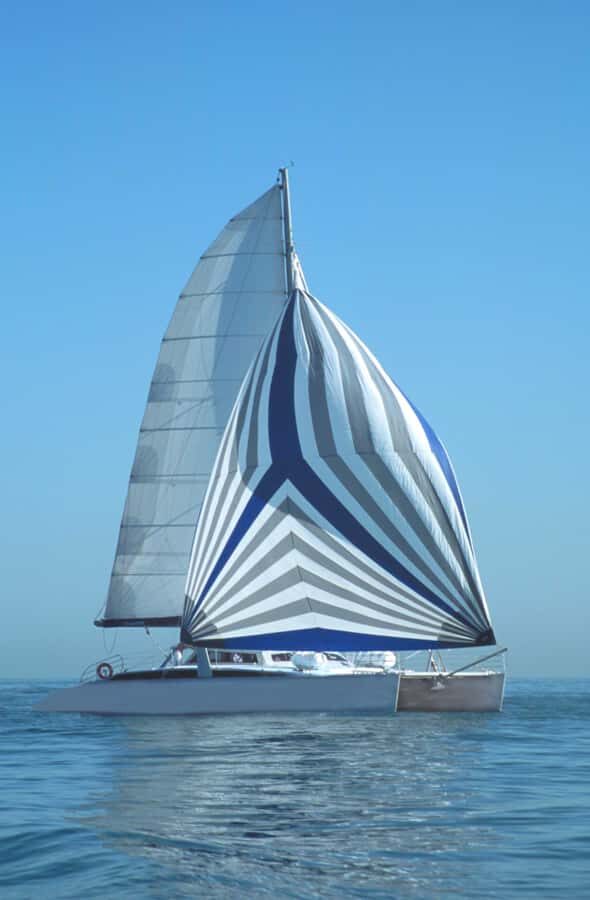
After you board, expect a real coastal cruise before you get into the water. The Temptation is a 58-foot sailing catamaran, and that matters because you feel the change in pace: you go from standing around on land to actually being out on the water, watching the coastline open up behind you.
This cruise isn’t just transit. It’s part of the experience—you’ll be scanning for dolphins while also getting the southern coastline view from the water, which is something you just don’t get from shore.
One practical detail: dolphin spotting can take time. On at least one recent outing, the dolphins were found after about 1.5 hours of searching, and that’s a good reminder that you should treat this as a morning on the sea, not a quick snorkel break.
Wetsuit, mask, snorkel: what you’re really signing up for
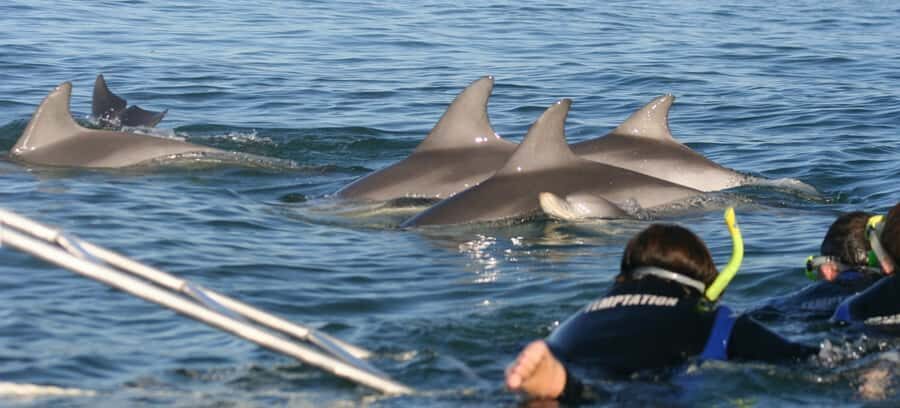
You’re provided with wetsuits, masks, and snorkels, plus swim commentary from the guide crew. That’s a big deal for value because it saves you from renting gear elsewhere and also helps you get into the water quickly when the dolphins are nearby.
What you should know before you go: even with a wetsuit, you still feel conditions. Some people mention the water being cold, and if you’re not used to being in choppy or cool water, you may want to mentally prepare for that.
Also, plan for basic comfort and safety. Bring a hat, towel, sunscreen, and food and drinks (refreshments are not included). If you have a watertight camera or waterproof phone case, bring it—you’ll want it for those moments when dolphins come close.
The dolphin swim setup: net under the boat vs being towed behind
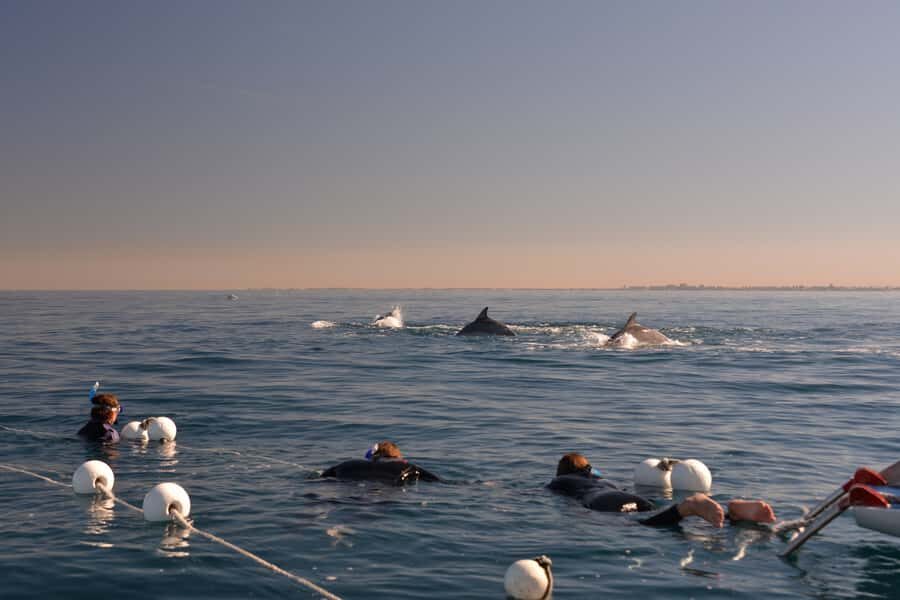
The in-water part is where this tour earns its reputation, but the setup can vary. Based on what people describe, you’ll likely experience snorkelling in one of two ways:
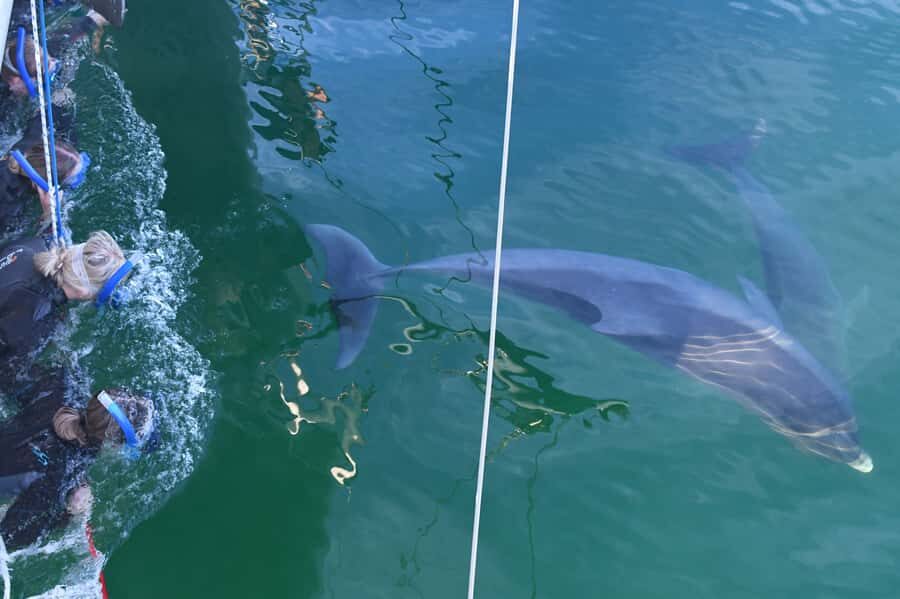
- Front swim under/near a net: you lie in position under the front section and watch dolphins play close by.
- Back swim or tow: you may be dragged or towed behind the boat instead of being in the front viewing position.
Here’s the practical reality from the way the crew runs it: the front swim tends to be the best viewing spot. One person described feeling like they were fighting a bit for stability during the back swim and seeing fewer dolphins from that position, while the front swim was where the dolphins spent more time playing near the boat.
The good news is that you’re not stuck with only one experience for the whole day. People report being rotated into groups so everyone gets turns, and you’re usually in the water more than once. That’s important because dolphins don’t hold a meeting schedule. Pods move, and being able to repeat your snorkel time increases your chances of seeing playful behaviour.
Tip for smoother water time: if you’re a weaker swimmer or you’re nervous, focus on staying calm, keep your snorkel position set, and follow the crew’s instructions for how they want you positioned. They’re there to manage safety and dolphin behaviour at the same time.
Watching dolphins close up: the whistles, the bubbles, the science talk
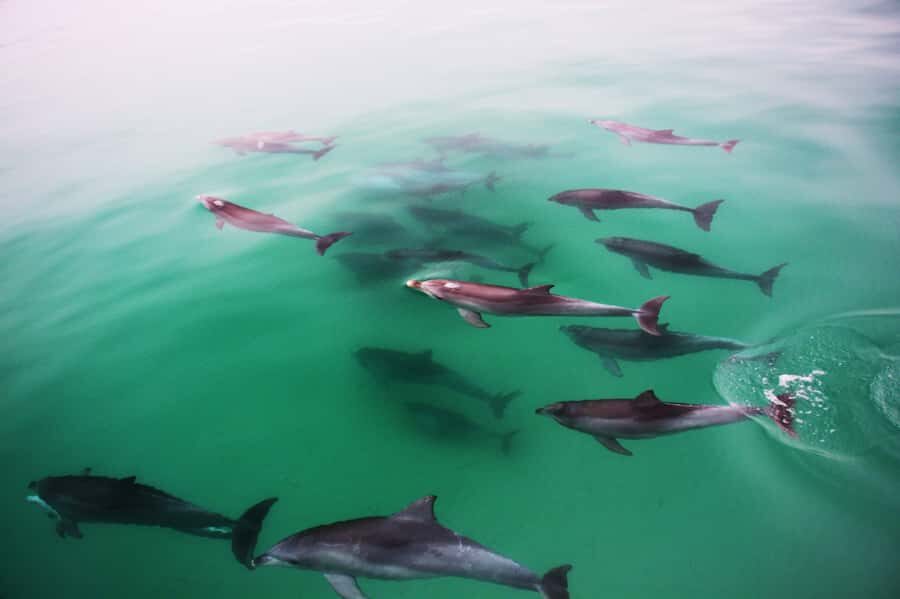
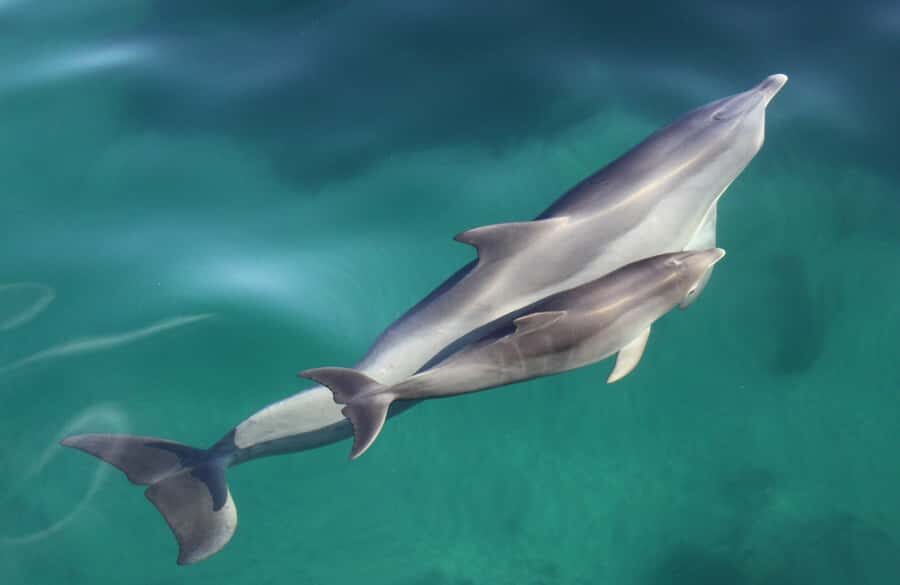
When you first see dolphins underwater, it can feel unreal because you don’t just look at them—you’re actually in their space. People specifically call out how special it feels to hear dolphins underwater, including whistles and echolocation-type sounds.
What I like most is that the guides turn those moments into learning. The crew includes marine biologists, and the commentary is focused on dolphin behaviour and what you might be seeing. Guides like Brett and Holly stood out for dolphin education and answering questions, and that’s the difference between a fun swim and a day that sticks with you.
You’ll also get insight into the crew’s ethics. People repeatedly note that dolphins are wild and not fed or baited, and that the staff keeps interactions respectful. You don’t get the feeling the boat is chasing. When it’s time to leave a pod alone, the crew moves on and looks for another group.
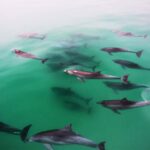
One more value point: you may see more than one pod. Some days include multiple pods in the same outing, including playful dolphins swimming close to the boat and sometimes calves. That variety is a big reason people feel like they got their money’s worth.
Other dolphin watching tours in Adelaide
Boat viewing counts too: what to do if you miss the closest moments
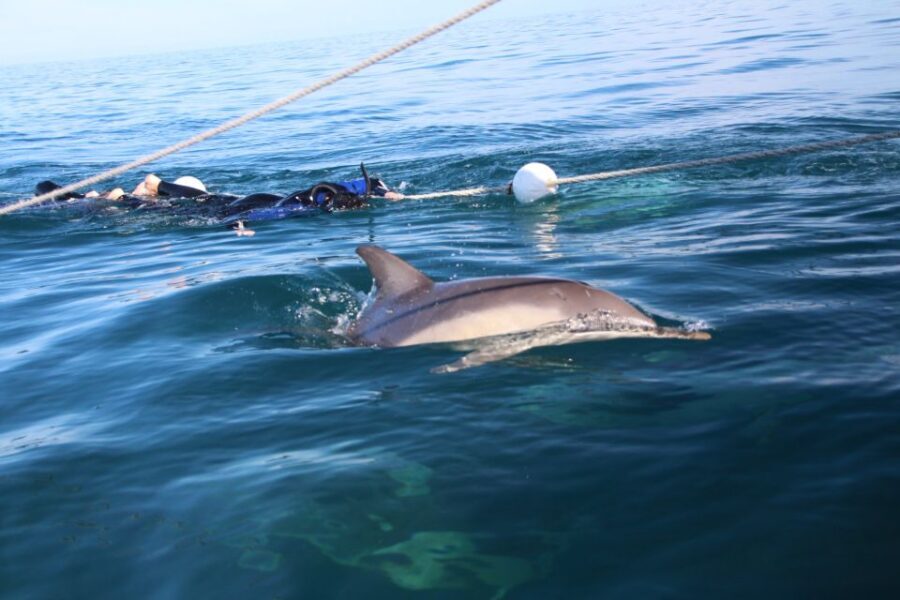
Even if you’re not the one in the net at a specific second, the dolphins are often still easy to spot from the boat. Many people note seeing dolphins from above while waiting their turn, which means the experience doesn’t hinge on perfect timing every minute.
If you’re trying to get photos or video, you’ll be happier if you treat the day like two separate goals: snorkel time for closeness, and boat time for broader dolphin action. Then you won’t panic if one snorkel session is quiet and another is lively.
Also, consider this: the dolphins can be close enough that you feel like you could reach them in theory, but you still shouldn’t rush behaviour or break rules. The whole point is letting them choose the interaction level.
Photo and video: turning one good moment into a whole memory
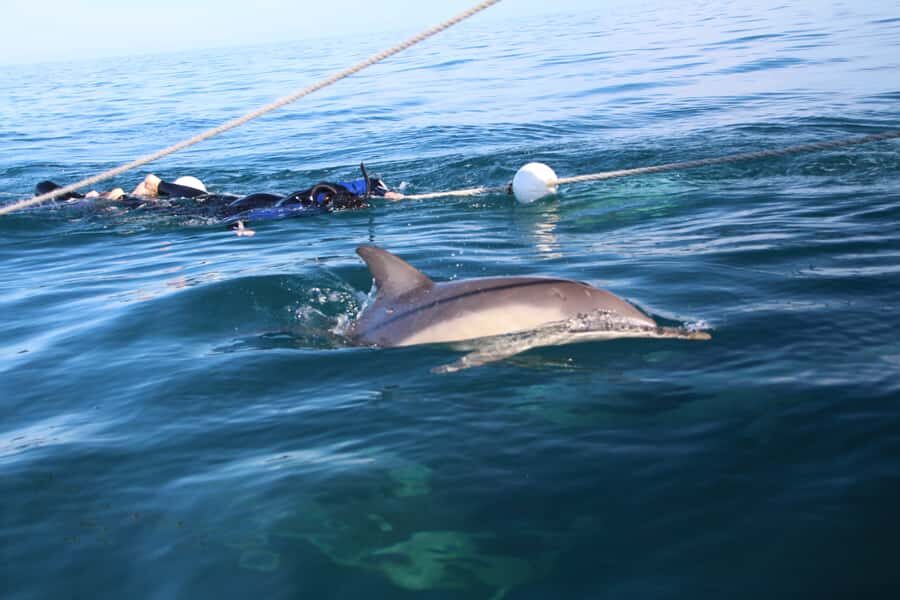
The tour includes something that people get excited about: photos and videos are taken of you and the dolphins. That matters because the water moments you’ll remember most are often the ones you can’t capture well yourself—camera handling while snorkelling is a sketchy plan.
Some reviewers also mention GoPro-style shots and a photo/video package feeling like a bonus rather than a gimmick. Practically speaking, it means you can focus on watching and staying safe while someone else handles the recording.
If you bring your own waterproof camera, do it. But don’t assume you’ll get every shot. Let the included photo/video capture the key plays, and use your device for the easy-to-film scenes from the boat.
Seasickness, cold water, and real-life body limits
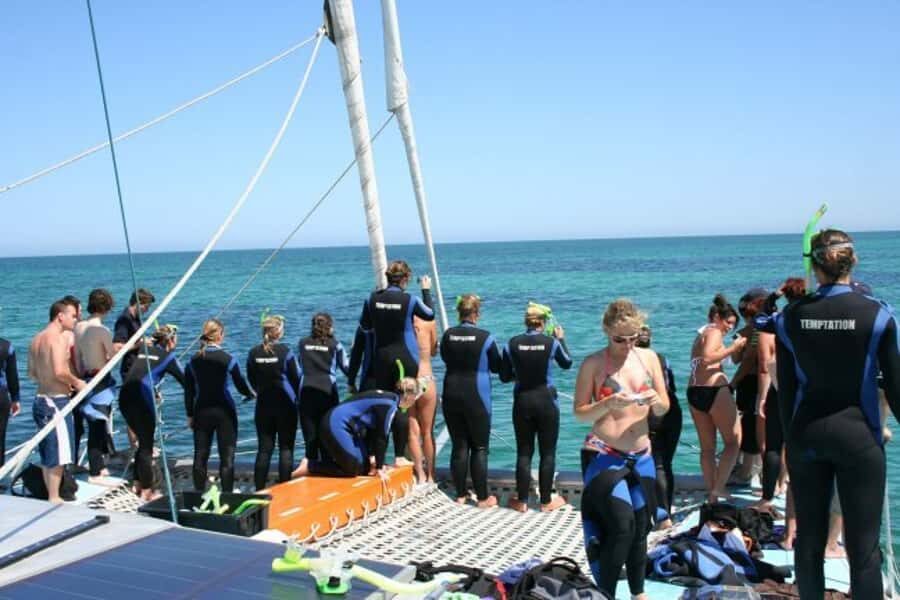
This isn’t a luxury spa float. It’s time on a working ocean surface with wetsuits and snorkels, and that’s why your prep matters.
From the info you have, the tour is not suitable for people with mobility impairments and people with heart problems. That’s non-negotiable for safety.
From the practical advice people share: some folks get seasick, and rougher conditions can lead to cancellations or reschedules. If you’re prone to motion sickness, bring your usual remedy and plan to sit where you feel steadier on the catamaran.
On cold days, a wetsuit helps, but you still might feel chilled between swims. Bring a towel so you can warm up fast afterward, and keep your hat accessible.
Value check: is $105 fair for a 3.5-hour dolphin swim?
At $105 per person for a 210-minute experience, this is a premium activity. The value comes from a few specific things you’re getting together:
- You get the boat experience plus the offshore dolphin search.
- You get provided wetsuit/mask/snorkel gear.
- You get repeated in-water chances, not just a single 10-minute moment.
- You get marine biologist-style commentary and the kind of ethical wildlife interaction that people care about.
If you compare it to a simple dolphin cruise without snorkel time, this costs more because it adds hands-on participation and extra staff time. If you compare it to a full-day tour elsewhere, the time here is focused: a 3.5-hour outing plus the chance to see multiple pods can feel efficient.
In other words, the price makes sense if you want an active wildlife encounter and you’re comfortable in water. If you only want to watch dolphins from a distance, you might find this costs more than your ideal day. But if you want snorkel closeness, it’s the kind of activity you’ll remember long after your inbox fills up.
After the swim: what to do back at Glenelg
When you’re finished, you head back to the marina and you’ve still got energy and daylight to burn. Glenelg has restaurants and shops right on the shoreline, so you can turn this into a full morning-and-lunch kind of plan.
I like the timing because it doesn’t swallow your whole day. You can do the swim, dry off, eat something, then wander the waterfront without feeling like you rushed out just to sit on a bus again.
Should you book the Adelaide dolphin swim with Temptation?
Book it if you want wild dolphins, real ocean time from a proper catamaran, and a guided snorkel swim that takes safety and dolphin space seriously. It’s especially worth it if you enjoy marine life facts and you’re okay with the idea that dolphin encounters depend on where the pods are, not on your personal schedule.
Skip it if you know you can’t handle water conditions, or if your situation falls under mobility impairment or heart problems restrictions. Also think twice if you’re highly prone to seasickness and you haven’t planned for it.
If you’re ready to be flexible with weather, and you want the best version of a dolphin encounter that’s still respectful and wild, this one is a strong choice.
FAQ
Where is the meeting point?
Meet at Marina Pier in Glenelg, at the bottom of the stairs/ramp in front of The Oyster Bar (at the very end of Anzac Highway).
How long is the tour?
The duration is 210 minutes (about 3.5 hours).
How much does it cost?
The price is $105 per person.
What’s included in the experience?
It includes wetsuits, masks, and snorkels, a 3.5-hour coastal cruise, encounters with wild dolphins, and swim commentary.
What should I bring?
Bring a towel, swimwear, sun hat, sunscreen, a camera, food and drinks, and a waterproof camera if you have one.
Are refreshments provided?
No. Refreshments are not included.
Is the tour suitable for people with mobility impairments or heart problems?
No. It is not suitable for people with mobility impairments or people with heart problems.
Is there a live guide and what language?
Yes. There is a live tour guide, and the tour is in English.
Can I cancel for a refund?
Yes. You can cancel up to 24 hours in advance for a full refund.